
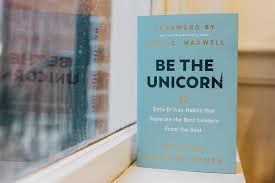
William Vanderblomen realized something remarkable after 15 years of conducting executive searches. After combing data from that entire period, he identified a set of unique habits, traits, and attributes shared by the most effective leaders. He called them the “Twelve Data-Driven Habits that Separate the Best Leaders from the Rest,” outlined in his book Be the Unicorn.
Several years ago at an AMCI Conference, I delivered an Ignite-style session where I reviewed these 12 habits of “unicorn” leaders. As someone who has spent more than 25 years in the association profession, the book struck a chord with me. I wanted others to see just how critical these skills are in our world. Yes, there are hard skills required to do our jobs but there are also these less tangible qualities that seem to set the very best leaders apart.
If you are like me, you have likely sat where I have sat. You’ve reviewed 50+ resumes for a Senior Account Manager role and narrowed them down to a dozen. From there, you move into interviews. And that’s when it happens. Two or three candidates emerge as “different.” They communicate differently. They think differently. They show up differently. They stand apart.
Those individuals, the top 1%, are what I would call “Unicorn” leaders. They possess traits such as authenticity, responsiveness, and agility, among others. And those are exactly the traits that are needed in the association profession (and, frankly, in many others as well).
There has been a lot of noise in our space lately around AI, much of it rooted in fear, particularly around job loss. And yes, there are projections (Bloomberg estimates as many as 120 million jobs globally may be impacted). But I see it differently. AI is not the apocalypse. In fact, it’s an opportunity to evolve.
It’s an opportunity for people to double down on what machines cannot replicate – human-centered skills. And in the association world, we are uniquely positioned to lead that evolution through the credentials, certifications, and professional development opportunities we provide. The real differentiator going forward will not just be what you know. It will be how you lead, communicate, and adapt.
That’s where these “Unicorn” habits come in.
Over the next few weeks, I’ll be unpacking each of these habits and exploring what they look like in the day-to-day reality of association leadership. This won’t just be a review of the book. It will be a translation into how you can apply these traits to your own work and leadership journey.
Next week on TyingItTogether.com, we’ll start with four foundational traits: being Fast, Authentic, Agile, and a Solver.
Leave a Reply
You must be logged in to post a comment.